MySafe
An app that blocks or releases a certified safe lock. Anyone with rights releases the lock in the app, enters their code on the keypad and opens it. Anyone who no longer has rights cannot release the lock or enter their code. Simple, accessible and affordable: no server of your own and no software on your PCs. The basic app is free; for time lock, time delay, export and audit list there is a subscription per safe.
The app is the first key, the code the second
A blocked MySafe lock will not open, even with the correct code. Only when an authorised user releases the lock in the app can he enter his personal code on the keypad on site. Two steps are therefore always needed, and you withdraw rights with a single tap: anyone who no longer has rights gets no further than the first step.
This allows you to determine remotely who may open a safe and when, to see every opening and every attempt in an event log, and to block a safe immediately if a code is lost, a contract ends or an incident occurs. All safes at all sites are in the same app.
Three components
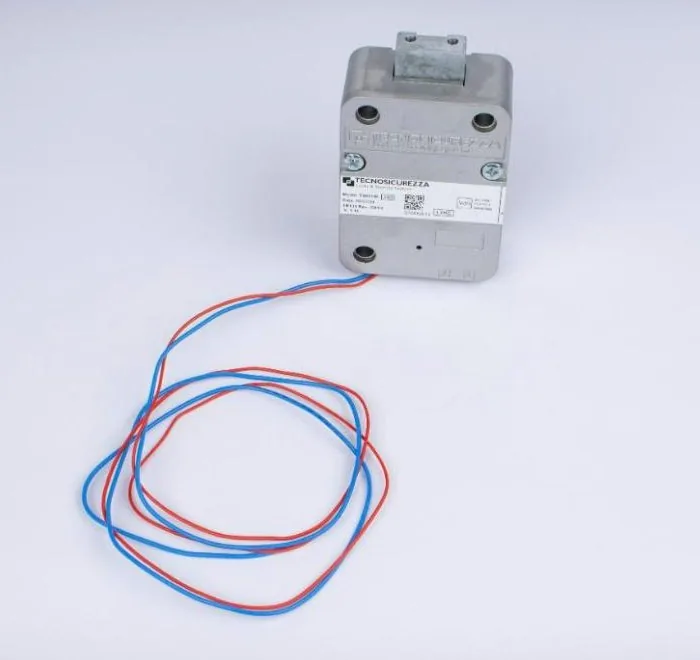
The lock is a Pulse Pro from Tecnosicurezza, certified to EN 1300 class B. It is fitted in the safe door and opens with a personal code on the keypad. Between the lock and the keypad is the MySafe communication unit: a small box in the safe that sends every event, encrypted (MQTTS), via your network to the MySafe service and from there to the app. The unit is powered via the network cable (PoE). If the power supply fails, the lock can be powered temporarily with a 9 V block battery held against the keypad; a released lock then opens with the code, a blocked lock does not. For emergencies there is a separate emergency code (ERC) that works independently of the app.
The unit also has two relay outputs for your alarm centre, an input for a door contact and a sensor for temperature and humidity. The cable runs through a 6 mm feed-through, in accordance with EN 1143-1. The lock is certified to EN 1300 class B and is therefore suitable for safes up to and including class V under EN 1143-1; from class IV, the standard requires two class B locks. When converting an existing safe, we check beforehand whether the safe and feed-through allow this.
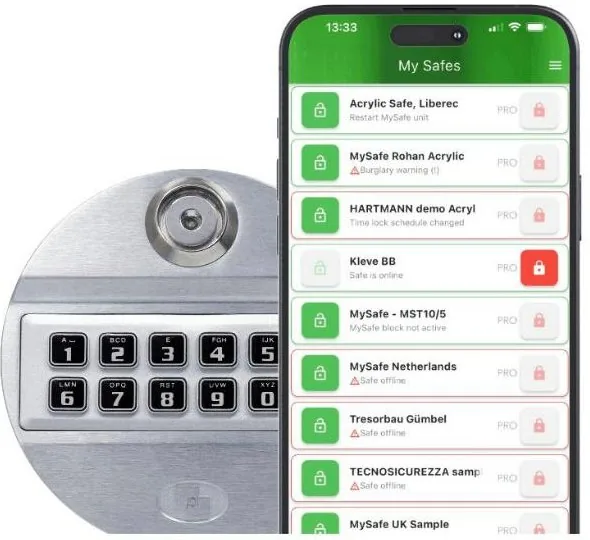
On the safe door. Each user has their own code; the codes are managed on the lock, the rights in the app.
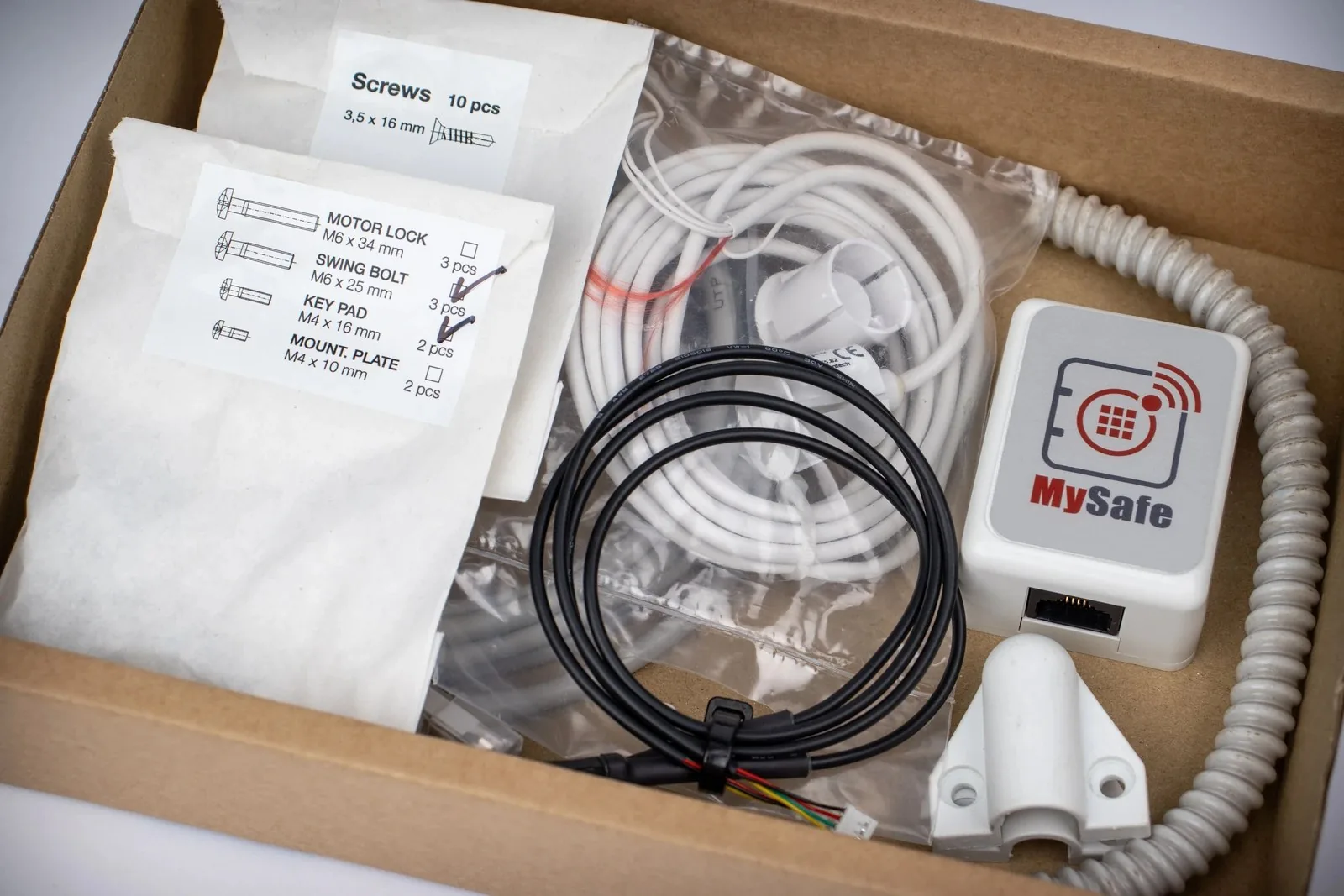
Behind the door, powered via the network cable. Transmits every event in encrypted form and receives releases, blocks and settings.
What you see and do in the app
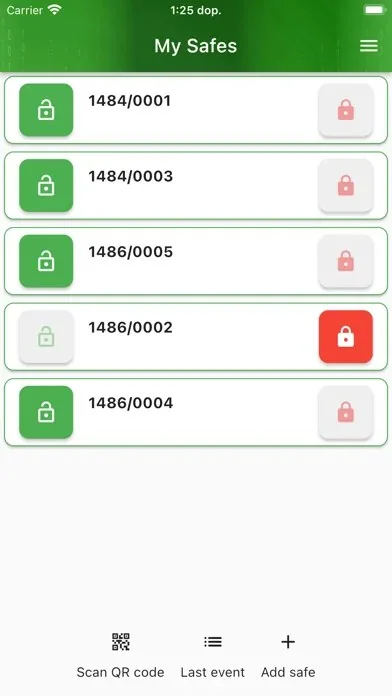
All safes in one overview: open, closed, blocked, online.
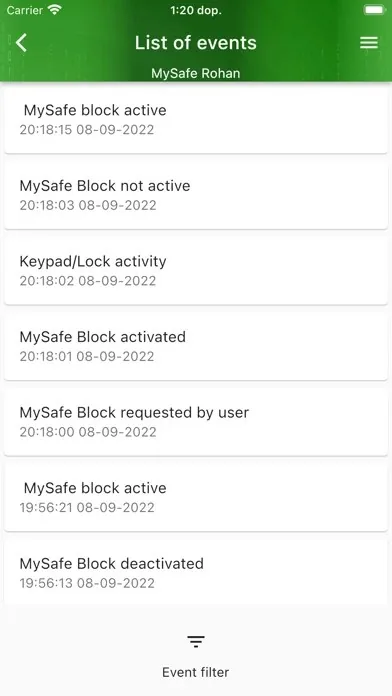
Every opening, incorrect code, block and release with time and user.
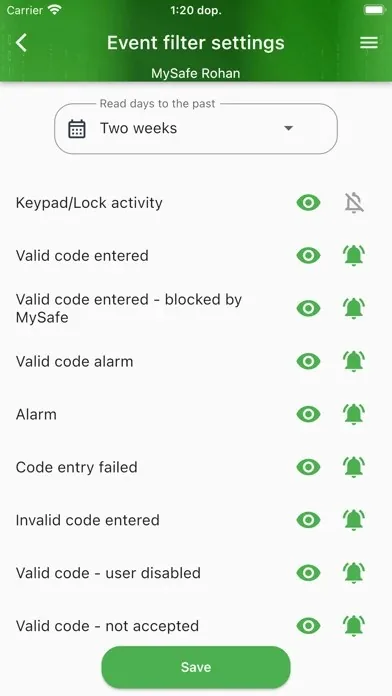
You choose for which events the app notifies you.
Screens of the MySafe app as published by the developer. Display and functions vary by app version and package.
Three steps
- 1Release in the app
Anyone with rights releases the lock in the app. Without rights this step is impossible and the safe stays closed.
- 2Code on the keypad
The user enters their personal code on the keypad on the safe door. Each user has their own code.
- 3Open
The lock releases and the safe opens. The opening is recorded in the event log with name and time; after closing, the safe can automatically block again.
Functions
- Release or block a safe from the app, without a time schedule: in the event of a lost code, the end of a contract or an incident
- See who opened the safe, when and for how long, even remotely, on your phone
- Set a time lock: outside the agreed hours the safe will not open, even with the correct code
- Time delay against hold-ups; silent alarm with a separate code
- Notification on opening, wrong code, silent alarm or abnormal temperature and humidity
- Individual code and individual rights per employee, up to 49 users per safe; temporary code for a replacement
- Event log in the app and in the lock itself, exportable for audit
- All safes at all sites in one app; link to your alarm monitoring centre via relay outputs
Technical data
The key data for your technical department or IT. Expand to view it.
Show the technical specifications
| Lock | Pulse Pro (Tecnosicurezza), certified EN 1300 class B and UL Type 1; local audit memory in the lock |
|---|---|
| Codes | 1 administrator, 1 master code, 1 emergency code (ERC) and 49 users; blocked for 5 minutes after 4 incorrect codes |
| Communication unit | Between lock and keypad; Ethernet with encrypted connection (MQTTS); power via PoE (IEEE 802.3af) or injector |
| Connections | 2 relay outputs (alarm), door contact input, 3 inputs; temperature and humidity sensor |
| Emergency power | 9 V block battery against the keypad as emergency power for the lock; the status (released or blocked) remains in force, emergency code ERC separately |
| Built-in installation | 6 mm cable feed-through in accordance with EN 1143-1; lock EN 1300 class B, suitable for safes up to and including class V (from class IV two locks) |
| App | iOS and Android. Basic (free): notifications, blocking, sensors, event list, user management. Basic+ (subscription per safe): time lock, time delay, auto-block, door/bolt alarm, export to PDF, history. Pro (subscription per safe): audit list and auto-block at high temperature |
| Safes | A new certified safe from our range, or conversion of your existing safe where the lock fits |
| Origin | European developer (Czech Republic); configuration by trained technicians |
Three ways to start
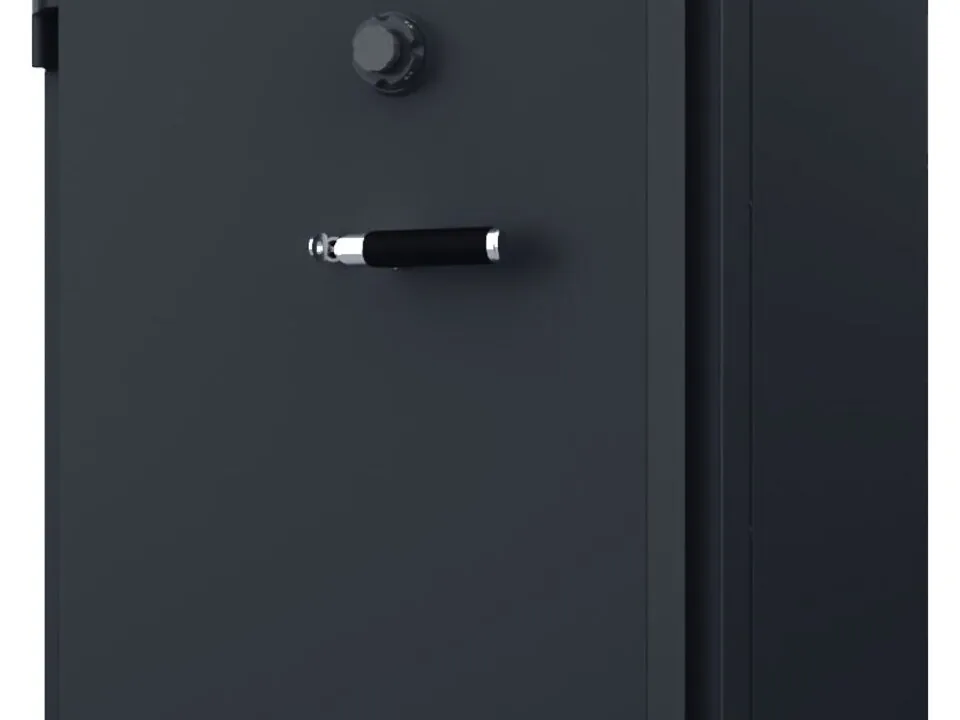
New safe with MySafe
A certified safe from our range, supplied with the lock already fitted and linked. One delivery, one guarantee.
Request a proposal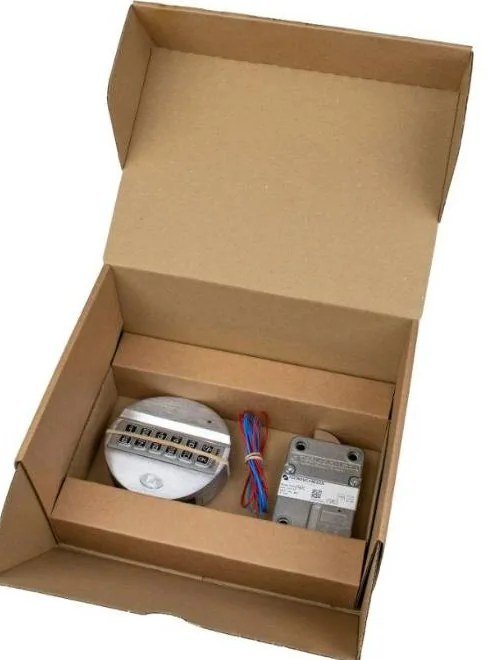
Converting your existing safe
If your safe fits a standard safe lock, we replace it on site with a MySafe lock. We assess this beforehand from a photo or on site.
Send us a photo of your safe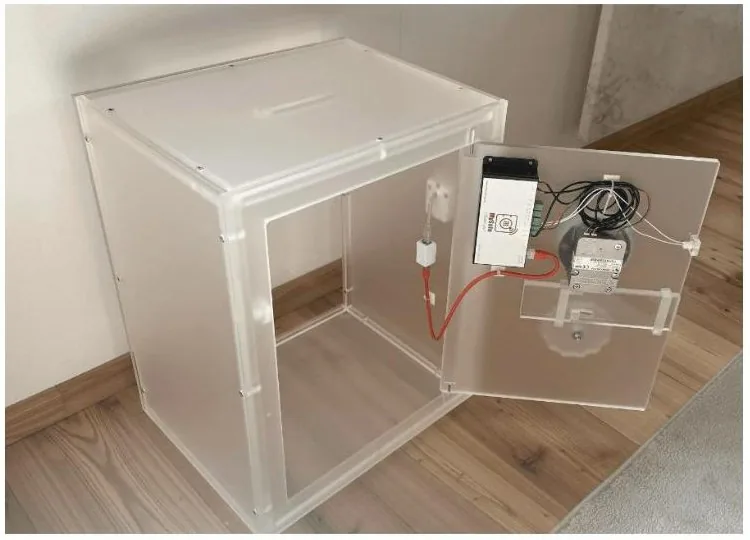
See how it works first
In our showroom there is a transparent demonstration safe: you can see the lock, the communication unit and the app working together. We can also bring it to you.
Request a demonstrationUp and running in four steps
- 1We fit the lock and the unit
On a new safe from our range, or on your existing safe if the lock fits. The keypad goes on the door, the communication unit inside, connected to your network.
- 2You scan the QR code
With the MySafe app, you link the safe to your account. You add colleagues with their own code and their own rights.
- 3You set what is allowed
Time lock, time delay, who may open when, and which events send a notification. All from the app, including remotely.
- 4You are notified and can review
Every opening or attempt appears on your phone. The event log keeps them, in the app and in the lock.
Soon also doors, badges and sensors
MySafe is developing the app into a single platform: in addition to safe locks, door locks and sensors are on their way, with identification by badge, managed in the same app. If you start with safes today, you can extend them later within the same environment.
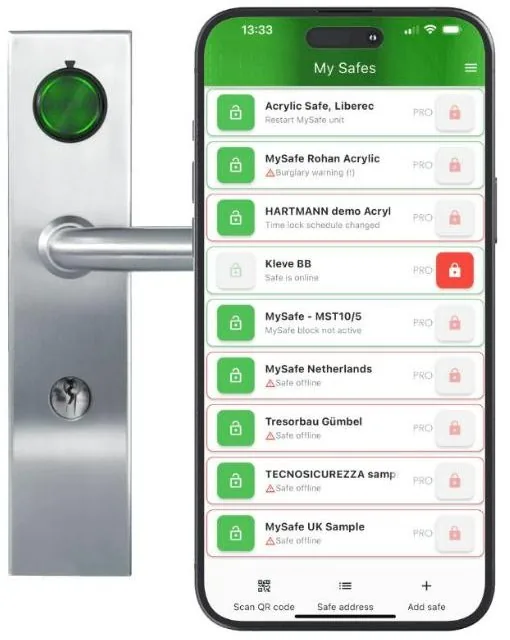
Door access with a badge, managed in the same app as the safes.
Frequently asked questions
Can I open the safe entirely remotely?
No. The app releases or blocks; the user enters their code on site. This way, someone is always responsible at the safe.
Does the safe work if the network fails?
A lock that has been released opens with the code like an ordinary electronic safe lock. Releasing or blocking waits until the connection is restored; the events are then still forwarded. For emergencies, there is a separate emergency code.
What does it cost?
You buy the lock, keypad and communication unit once; we fit them in a few hours. The basic app is free. For time lock, time delay, export and audit list, you choose a subscription per safe: Basic+ (€2.99 per month or €29.90 per year) or Pro (€7.99 per month or €79.90 per year), manufacturer's rates at the time of writing. No server of your own, no installation on your PCs.
How secure is the connection?
The communication unit communicates in encrypted form (MQTTS) with the MySafe service and does not need any open inbound ports. We place the unit on its own network segment and change the default settings during installation.
Does the safe remain certified?
The lock is certified to EN 1300 class B and is therefore approved for safes up to and including class V (EN 1143-1); from class IV, two class B locks are required. The cable runs through a 6 mm feed-through in accordance with EN 1143-1. With a new safe from our range, we supply the certificate for both lock and safe; for a conversion, we first assess whether the existing safe permits it.
Does MySafe detect which item was taken from the safe?
No. The lock records who opened the safe and when.
Who sees the data?
You and the users to whom you yourself give access. Axcor cannot see your safes, unless you temporarily add us for support.
See MySafe in action
In our showroom there is a transparent demonstration safe. Tell us how many safes you have and at which locations; we will send you a proposal with lock, installation and the suitable app package.